

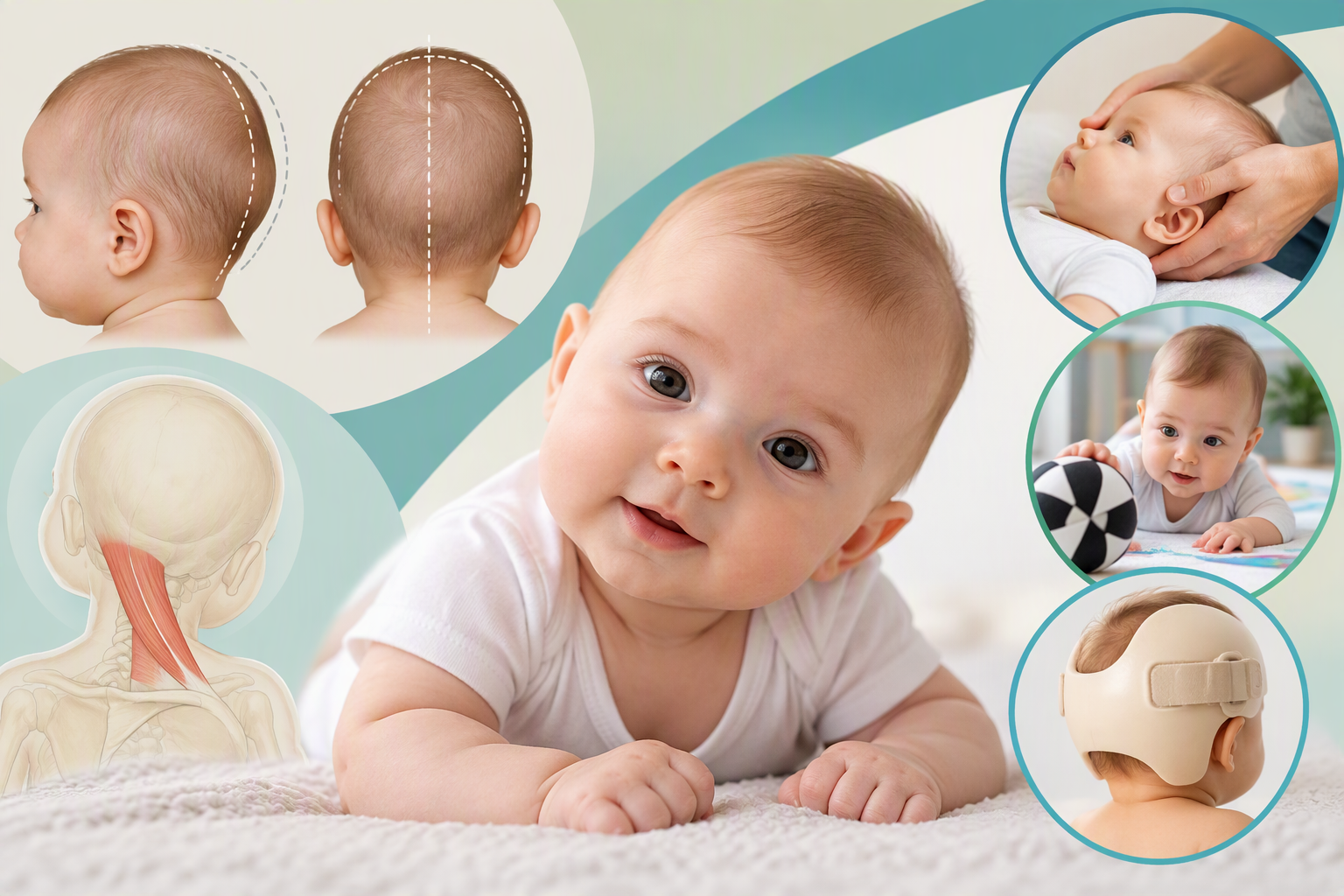
Presenter: Dr. Elizabeth Arpin, PT, DPT. Dr. Arpin, a physical therapist, presents a comprehensive, evidence-based course designed for newer pediatric therapists focusing on the evaluation and treatment of torticollis and plagiocephaly. The presentation covers the clinical background of congenital muscular torticollis (CMT) and positional plagiocephaly, including risk factors like breech birth and the impact of the 'back to sleep' campaign. Dr. Arpin details various types of torticollis ranging from postural preference to the presence of an SCM mass and provides visual guidance on identifying different cranial deformities. The course includes detailed instructional segments on objective assessment techniques. Furthermore, the presenter demonstrates treatment interventions like passive stretching, active range of motion exercises, and environmental adaptations for caregivers. The presentation concludes with a case study to synthesize the clinical reasoning required for assessment, classification according to the APTA clinical practice guidelines, and effective discharge planning.
Course Contact Hours: 2 CH/0.2 CEU*
*Although continuing education credit may be offered for this activity, requirements for acceptance and applicability vary by profession and state. Participants are responsible for confirming eligibility and acceptance with their applicable licensing board or credentialing authority.
Target Audience: Physical Therapists
Course Completion Certificate: Must pass course post-test by 80% within 30 days of enrollment to receive its completion certificate within 30 days
Course Description
This course will provide evidenced-based evaluation and treatment strategies for infants diagnosed with torticollis. Observational techniques, various measurement tools and targeted pre- and post-partum history taking will be discussed in detail to provide participants with the foundation needed to analyze and develop an effective treatment plan. By considering a whole-body approach to assessment, participants will learn how to appropriately screen and determine the need for outside referral. Common and novel treatment approaches will be reviewed with an emphasis on family training and creation of a home program that is both effective, adaptable, and achievable for the child’s caregivers.
Course Objectives
Upon the completion of this course, students will be able to:
1. Identify and describe the various types of torticollis and plagiocephaly
2. Describe signs and symptoms that can present in multiple body systems that can contribute to or affect torticollis and patient outcomes
3. Analyze and interpret the CMT Classification Grades and Decision Tree to determine patient prognosis
4. Gather and interpret data from clinical observations and assessments to justify referral to other healthcare providers in complex torticollis cases
5. Design an evaluation outline and treatment plan based upon a case study of an infant with torticollis
- Teacher: Site Owner
